Abstract
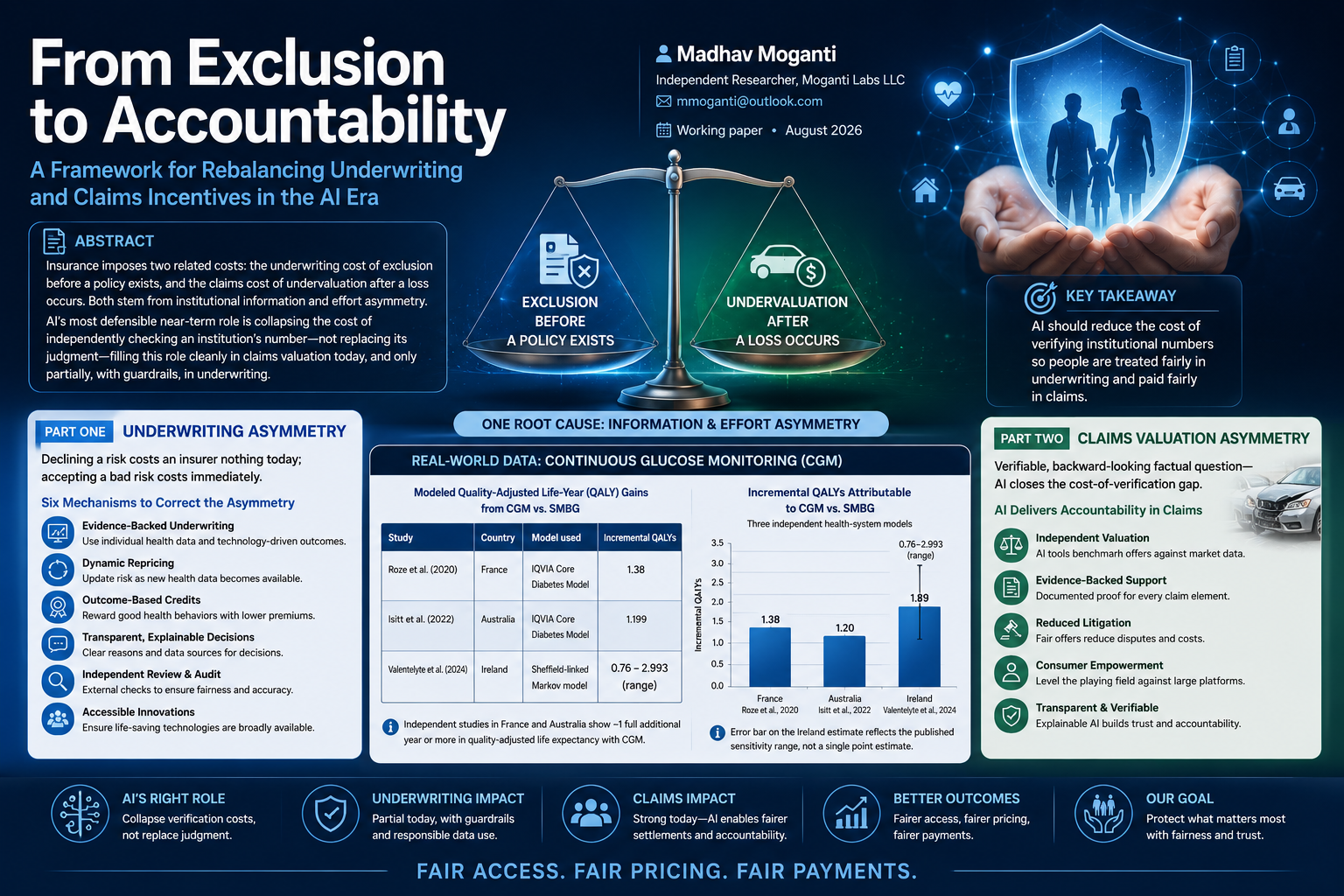
Insurance imposes two related costs on the people it is meant to protect: the underwriting cost of exclusion
before a policy exists, and the claims cost of undervaluation after a loss occurs. Both stem from institutional
information and effort asymmetry, but they differ in a way that matters for how artificial intelligence should
be deployed against each. Part-One addresses life insurance underwriting, where hereditary or chronic
conditions are priced from cohort-level mortality data that can be too coarse to reflect an individual’s
evidence-backed prognosis.